On Love is a Download - Hope and Despair in '90s Cyberpunk

Spicy City was a short-lived anthology series created by Ralph Bakshi that I didn’t know existed until a few weeks ago. It was an HBO creation that ran the summer of 1997 and promptly disappeared. As far as I could tell, there are no extant physical releases of the show, but it’s out there as ephemera on YouTube and elsewhere. I was able to find a copy of the show easily enough.
I am not going to talk about the whole series. It is a Ralph Bakshi creation. If you know his work, you’ll definitely recognize it. What really interested me was the first episode, Love is a Download.
A short background
In Internet history, 1997 is an interesting year. The Telecommunications Act of 1996 had recently passed. This Act reshaped the regulatory infrastructure that managed the Internet and other communication networks. It essentially laid the groundwork for our modern nightmare. At the time though, it was seen as a new frontier. People were excited about computers and the Internet. Broadband was just becoming more widely available. People were using this new space in new and interesting ways.
The Internet had captured the public imagination. Those who had come before, the survivors of the Eternal September a few years earlier, watched as their spaces became more and more crowded. AOL was king. In 1996, John Perry Barlow released his well-known A Declaration of the Independence of Cyberspace which has been critiqued to death. I mention it only because of the time, and because, like this episode, it is an object of a specific mindset. A mindset that I, someone who worked in telecom in 1997, widely embraced. It was also a mindset that lead directly to the mess we live in today.
Love is a Download: Synopsis (spoilers for a 1997 show)
In broad strokes, Love is a Download is about a love triangle. There is Alice, a buxom blonde who is dating Jake, a stereotypical gangster, but who is in love with Lem, a heavy-set, poorly dressed man, who wrote much of the “code” that runs their modern cyberspace. Lem is a war veteran and has a robotic arm. He is a recluse. He and Alice only connect as online avatars inside cyberspace where he appears as a handsome, shirtless boxer and she appears as a geisha (because it was the 90s and anything with cyberpunk had to include Japan). Jake is abusive and wants to kill Alice’s avatar rendering her physical mind/soul completely malleable to his desires. He hires Lem to find Alice’s avatar and when Lem realizes who Alice is, they escape into cyberspace together leaving their old bodies behind.
What fascinates me about the story is not the plot. It is simple and straightforward which suits the work. What interests me is what it says about the hopes of desires of those living in that moment. Hopes and desires that I, in some sense, shared.
Digital Transcendence: An Ideal that Never Was
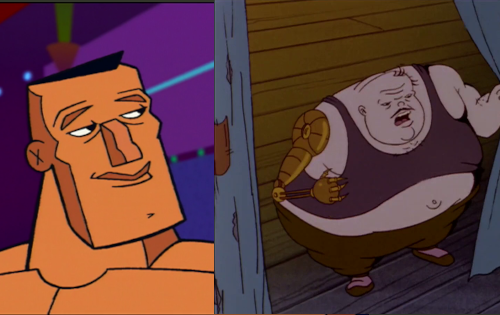
At the core of this is the notion of cyberspace as a sort of equalizer. A place where mind and personality matter more than image. The body can be abandoned - we can look like anyone and anything. We can shape our online selves to match our internal understanding of who we are.
In some sense, this was true. I was part of the BBS scene in the early-to-mid 90s. It was a wonderland of text, but it was also often very local. Local bulletin boards were cheaper to call, and large cities had several. They became an underground in and of themselves. These were not just spaces for online hookups and connections (although that was common), but they facilitated offline connection. They became a pathway for personal (and sometime sexual) exploration. It didn’t matter who you were in your daily life. On the right bulletin board you could be whoever you wanted, and you could carry that identity into your real world at least to an extent.
And yet, even in these spaces, there was still a sort of acknowledgement of the cultural ideal. Like the show, Lem looked like a fantasized creation of the ideal male. His physical self was a sign of shame. This is why he needed transcendence. The avatar is always an idealized construct, but firmly ensconced in cultural definitions.
In that sense, there was a never an escape from the physical into the digital, far from it. Instead, there was a recapitulation to the social, physical, ideal. The digital took the ideal and accepted it as fact. What the digital offered, then, was not the disruption of the ideal, but the promise that all could attain that singular ideal. In so doing, it centered the ideal as the only option. All others were aberrant.
I think today about generative AI. AI’s promise is not that anyone can be a musician, a writer, or an artist. Anyone can be those things, today. What AI promises is that anyone can create work to fit a supposed ideal, and that ideal is the only mark of quality. A concept that is, at its core, a fundamental falsehood. How often has technology been offered as a disruption to the status quo only to become its strongest driver? After all, if your tech solves a problem that no one has, who is buying it?
Love and Possession - Beware the Nerd
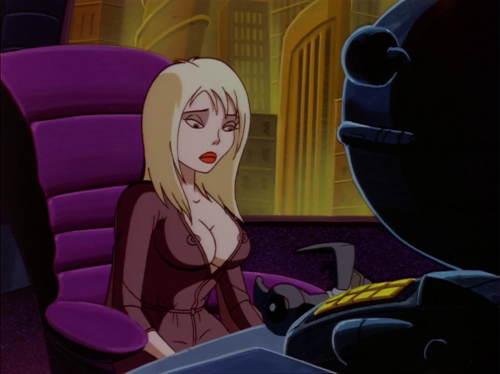
Alice is even more interesting. Here is a woman who is drawn sexy. She is already beautiful. She is trapped, though. In her offline world she is dating a man who is wealthy, attractive, and cruel. He sees her as an object which the show does nothing to reject. Alice is an object. She may possess a mind, but she ultimately exists to be had by either Jake or Lem. When she escapes, she escapes with Lem and only because of Lem. She recognizes him as the better man despite his physical flaws and thus becomes bound to him.
The shades of misogyny that drive incel culture run deep in the Internet’s DNA. It is the credo of every nice guy, “If only the pretty girls could see what a great guy I was, they would deign to fuck me.” In their minds, they imagine women as 2-dimensional as Alice who drift aimlessly unable to truly exist as anyone outside the men who define them. If there is one lesson of the modern age is that the nice guy nerd is no different than the asshole jock he is often placed in opposition to. They are both self-interested entities focused on status and control. Quite often, the women around them suffer for it.
To be fair, there is nothing innately wrong with a story like this. It is less that half an hour, and not meant for complex storytelling. It is possible to consider Alice as a woman who knows exactly what she wants and chooses Lem regardless. She could have agency and choice. This is but one show, after all.
It carries that that mindset, though. I can feel it being read that way. I can hear the nice guys around too many gaming tables I have left shaking their heads. Hell, I may even see shades of my younger self in this mindset which is disappointing to say the least. In the end, the story of choosing love and following your heart is universal, and not every character need be fully developed to still have impact. I am a fan of cyberpunk, and I don’t hate the story of Love is Download. It is clumsy but sweet. This is not a critique of a show, but of the imaginary that sleeps beneath it. Within that imaginary, which grew up in the midst of the 90s, her character can be read in exactly that way.
The stories we tell
That is what made this episode so intriguing to me. It encapsulates a growing Internet imaginary like that of John Perry Barlow that imagines cyberspace as its own independent space outside of physical control while ignoring the paradox of its absolute dependence on that physical space. It is an imaginary of those steeped in privilege that pretend to rebellion, but really just wants the keys of social control in their hands. By and large, they have it.
Now those of us who remain, who still see the magic in the machine, are tasked with the creation of a new imaginary. One that doesn’t do away with physical desire or digital fantasy, but that melds that with the physical realities in which we all must contend.